How To
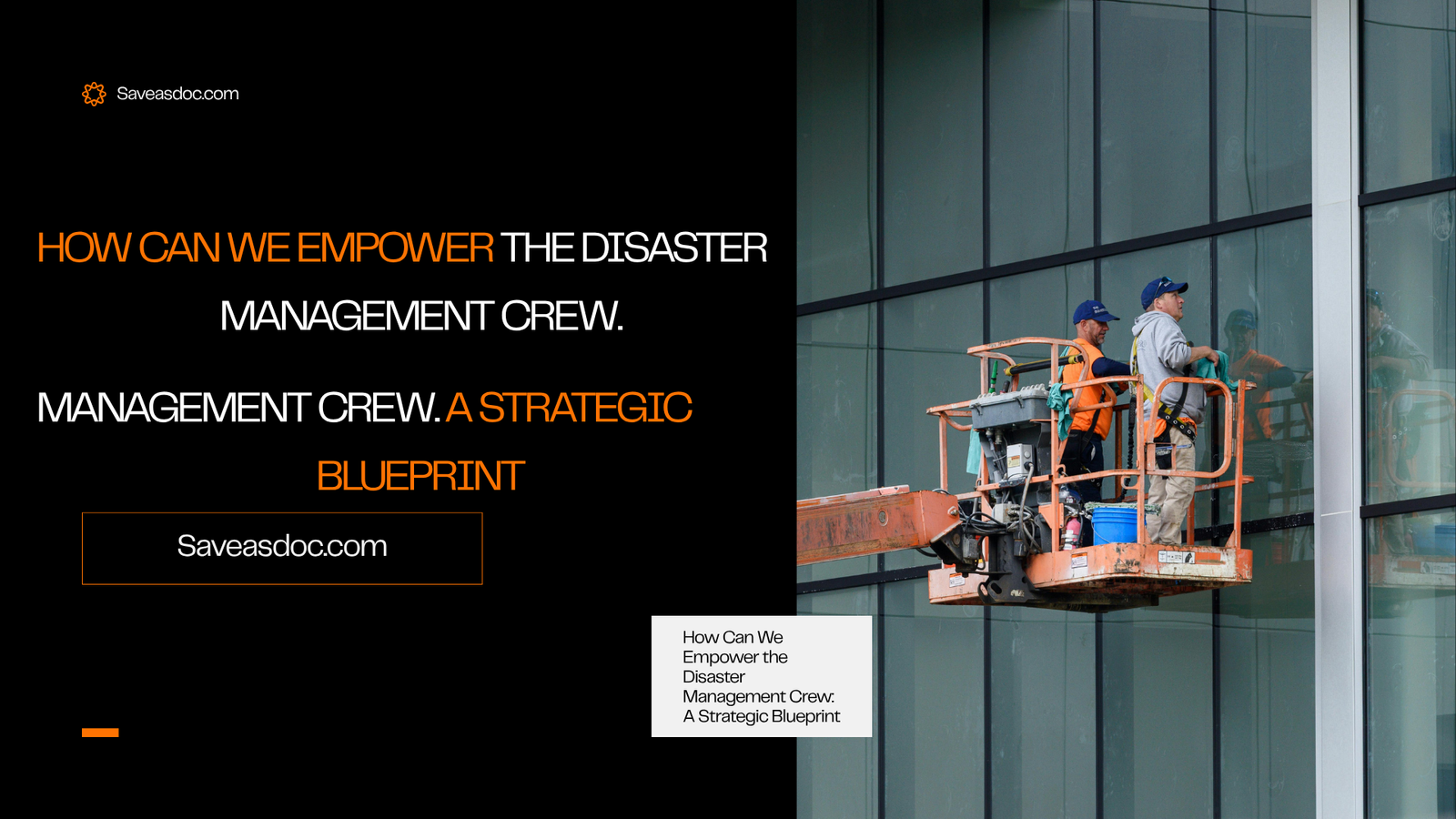
How Can We Empower the Disaster Management Crew: A Strategic Blueprint

Introduction
Disaster management crews form the backbone of societal resilience, operating at the nexus of chaos and order. Their effectiveness, however, hinges not merely on individual courage but on a holistic framework of support, resources, and strategic empowerment. The question, therefore, is not simply about what they do, but rather how the systems, institutions, and communities surrounding them can cultivate an environment where these crews can perform optimally, sustainably, and safely. This article explores the multifaceted approach required to empower disaster management crews, moving from theoretical support to tangible, actionable strategies.
The Foundation: Structured Training and Continuous Skill Development
To begin with, empowerment originates from confidence, and confidence is forged through rigorous, relevant, and continuous training. A crew dispatched into a flood zone or a wildfire corridor must possess not only the foundational skills but also the adaptive expertise to handle unprecedented scenarios. Consequently, investment in simulation-based training becomes paramount. High-fidelity simulations, ranging from virtual reality interfaces to full-scale mock disaster sites, provide a risk-free environment for decision-making under pressure. This approach allows teams to rehearse complex coordination, encounter system failures, and refine their communication protocols before facing a real-world crisis.
Moreover, the scope of training must expand beyond technical proficiency. In addition to hard skills like structural collapse rescue or hazardous material containment, crews benefit immensely from cross-disciplinary exercises. For instance, joint training sessions with public health officials, cybersecurity experts, and urban planners foster a shared mental model across agencies. This interoperability ensures that when a disaster strikes, the handoff between different units is seamless. Furthermore, continuous education programs, supported by institutional policies, ensure that skills remain current with evolving threats, such as those posed by climate change or technological infrastructure failures. By establishing a culture of lifelong learning, the crew is consistently empowered to act with authority and precision.
Technological Integration: Tools for Enhanced Situational Awareness
Simultaneously, empowerment in the modern era is inextricably linked to technology. Disaster management crews cannot operate effectively with outdated equipment or fragmented information systems. Therefore, the provision of advanced technological tools serves as a critical empowerment strategy. Unmanned aerial vehicles (UAVs), for example, grant crews a real-time aerial perspective of a disaster zone, enabling safer reconnaissance and more accurate resource allocation. Similarly, integrated communication platforms that consolidate data from satellite imagery, social media feeds, and ground sensors provide a common operating picture, thereby reducing the fog of uncertainty that often paralyzes response efforts.
In addition to hardware, the implementation of predictive analytics and artificial intelligence (AI) plays a transformative role. These technologies can forecast disaster progression—such as the path of a hurricane or the spread of a wildfire—with increasing accuracy. When such predictive intelligence is placed directly into the hands of field crews via ruggedized tablets or mobile command units, decision-making shifts from reactive to proactive. This technological empowerment not only enhances operational effectiveness but also significantly improves crew safety by anticipating dangerous shifts in conditions. Ultimately, the strategic deployment of these tools ensures that crews are supported by the best possible intelligence, reinforcing their capacity to protect both themselves and the communities they serve.
Psychological Resilience and Mental Health Support
While technical and technological elements are vital, the human factor remains the most critical variable. Disaster management crews are routinely exposed to traumatic events, moral injury, and extreme physical exhaustion. Without robust psychological support systems, the cumulative toll can lead to burnout, post-traumatic stress, and high attrition rates. Hence, a cornerstone of empowerment lies in the destigmatization of mental health care and the integration of proactive psychological support into the organizational culture.
Specifically, this involves implementing pre-deployment resilience training, during which crews learn stress inoculation techniques and coping mechanisms. Furthermore, the provision of confidential, readily accessible mental health services—staffed by professionals familiar with first responder culture—is essential. Peer support programs, where trained crew members offer immediate, empathetic assistance to colleagues after critical incidents, have proven particularly effective. These programs create a safety net, fostering an environment where seeking help is viewed as a strength rather than a weakness. By prioritizing psychological well-being, organizations empower their crews to sustain their careers with their health and purpose intact, ensuring long-term operational readiness.
Strategic Leadership and Decentralized Decision-Making
Empowerment also manifests through the structure of command itself. Traditional hierarchical models, while useful for maintaining order, can inadvertently stifle initiative, especially in the dynamic and fragmented landscape of a disaster. To counter this, a shift toward adaptive leadership and decentralized decision-making is required. This approach, often termed “mission command,” emphasizes the delegation of authority to the lowest appropriate level. Instead of awaiting directives from a distant headquarters, on-scene leaders are empowered to make critical decisions based on their immediate situational awareness.
This model functions effectively only when underpinned by a foundation of trust and clear intent. Senior leadership must articulate the overarching goals and strategic parameters, after which they entrust subordinate leaders with the autonomy to execute. Consequently, this fosters a sense of ownership and accountability among crew members. When individuals feel that their judgment is trusted and their expertise is valued, their engagement and motivation increase substantially. Moreover, this decentralized structure accelerates response times, as it eliminates bottlenecks in communication. In essence, by flattening the hierarchy where it matters most, organizations empower their crews to act with agility and confidence at the point of impact.
Resource Allocation and Logistical Sustainability
Another fundamental pillar of empowerment involves the assurance of adequate resources. A crew cannot be empowered if they are perpetually operating with a scarcity of supplies, outdated vehicles, or insufficient personnel. Strategic resource allocation, therefore, must be viewed not as a logistical afterthought but as a core component of crew enablement. This begins with accurate, data-driven budgeting that accounts for the full lifecycle of equipment, from procurement to maintenance. Reliable access to personal protective equipment (PPE), decontamination units, and specialized rescue tools is non-negotiable.
Beyond equipment, logistical sustainability extends to the management of human resources. Fair compensation structures, hazard pay, and predictable schedules—despite the inherent unpredictability of disaster work—contribute to a sense of stability. Additionally, the availability of rest and rehabilitation facilities, such as dedicated fatigue management protocols and post-incident recovery time, ensures that crews can recuperate fully between deployments. When organizations demonstrate a commitment to providing for the physical and logistical needs of their crews, they send a powerful message: that the well-being of the responders is as important as the mission itself. This, in turn, cultivates loyalty and a willingness to go beyond the call of duty.
Community Integration and Public Recognition
Furthermore, empowerment is significantly influenced by the relationship between disaster management crews and the communities they protect. A crew that feels valued and understood by the public operates with higher morale and a stronger sense of purpose. Therefore, fostering community integration through proactive engagement is a key strategy. This can be achieved through regular public education initiatives, open houses, and collaborative preparedness drills that involve local businesses, schools, and neighborhood associations. When community members understand the challenges and constraints faced by responders, they become more effective partners in resilience rather than passive bystanders.
In tandem with integration, public recognition serves as a powerful morale booster. Formal acknowledgment of acts of bravery, as well as consistent appreciation for the routine diligence of crews, reinforces the societal value placed on their work. This recognition should extend beyond symbolic gestures to include tangible support, such as legislative advocacy for responder protections and community-funded wellness programs. When crews perceive a strong, supportive bond with the public, their sense of professional identity is strengthened, and they are more likely to advocate for their own needs and innovations. This symbiotic relationship creates a virtuous cycle of mutual respect and enhanced operational effectiveness.
Policy Advocacy and Institutional Reform
On a structural level, the empowerment of disaster management crews is often constrained or enabled by the policy environment in which they operate. Consequently, individuals and organizations seeking to empower crews must engage in policy advocacy and institutional reform. This involves championing legislation that ensures sustainable funding mechanisms, such as dedicated disaster response funds that do not require emergency reallocation each fiscal year. Additionally, policies that standardize certification and mutual aid agreements across jurisdictions eliminate bureaucratic hurdles, allowing crews to deploy seamlessly across state or regional lines.
Similarly, advocacy for workers’ compensation reforms that specifically recognize the unique occupational hazards—including psychological trauma—faced by disaster crews is crucial. These policy changes provide a safety net that empowers crews to take calculated risks during operations, knowing that their long-term health and financial security are protected. Beyond formal legislation, institutional reform within response agencies themselves—such as creating ombudsperson roles to address grievances or establishing diversity and inclusion initiatives—ensures that the internal culture supports all crew members equitably. By addressing the systemic factors that influence daily operations, these advocacy efforts lay the groundwork for sustained empowerment.
Leveraging Data and Post-Incident Learning
Finally, empowerment is cultivated through a commitment to learning and accountability. Every disaster response provides a wealth of data and lessons. To empower crews, organizations must implement structured after-action review (AAR) processes that are constructive, not punitive. These reviews should focus on systemic improvements rather than individual blame, encouraging open dialogue about what succeeded and what failed. When crews see that their feedback leads to tangible changes—whether in equipment procurement, protocol adjustments, or training curricula—they recognize that their experience and insights are valued.
Moreover, the systematic collection and analysis of operational data can empower crews by providing evidence-based insights for future missions. For example, analyzing response times, resource utilization patterns, and communication flow metrics can identify inefficiencies that, once addressed, reduce friction for field crews. This culture of continuous improvement transforms every deployment into an opportunity for refinement. It also fosters a sense of professional agency, as crew members transition from being passive executors of orders to active participants in the evolution of their craft. In this environment, empowerment becomes self-perpetuating, driven by a collective commitment to excellence.
Conclusion
In conclusion, the empowerment of disaster management crews is a multifaceted endeavor that extends far beyond the provision of equipment. It requires a holistic integration of advanced training, technological support, psychological resilience, adaptive leadership, sustainable resources, community connection, progressive policy, and a culture of continuous learning. Each of these elements reinforces the others, creating a robust ecosystem in which crews can operate with confidence, safety, and purpose. When these strategies are implemented cohesively, the result is not merely a more effective response to disasters, but a more resilient society that values and uplifts those who stand ready in the face of crisis. By committing to this comprehensive approach, we honor their service and ensure that they are equipped to meet the challenges of an uncertain future.

-
Uncategorized6 months ago
Hello world!
-

 food4 months ago
weber grillvorführung: Mastering the Art of Live Grill Demonstrations
-
 Blog5 months ago
your topics multiple stories: Powering Dynamic Content
-

 News4 months ago
Washington Nationals vs Kansas City Royals Timeline: A Complete History
-
 Blog4 months ago
slylar box: Unlocking Modern Storage Solutions
-
 fashion4 months ago
Delta Fitness Authority: Pioneering Modern Fitness Strategies
-
 Sports4 months ago
ac milan vs ssc bari timeline: Historic Rivalry Story
-

 Technology3 months ago
Repmold: The Future of Precision Manufacturing